

New Hyundai Bayon Facelift: The Ultimate Subcompact SUV Guide (Specs, Design & Tech)
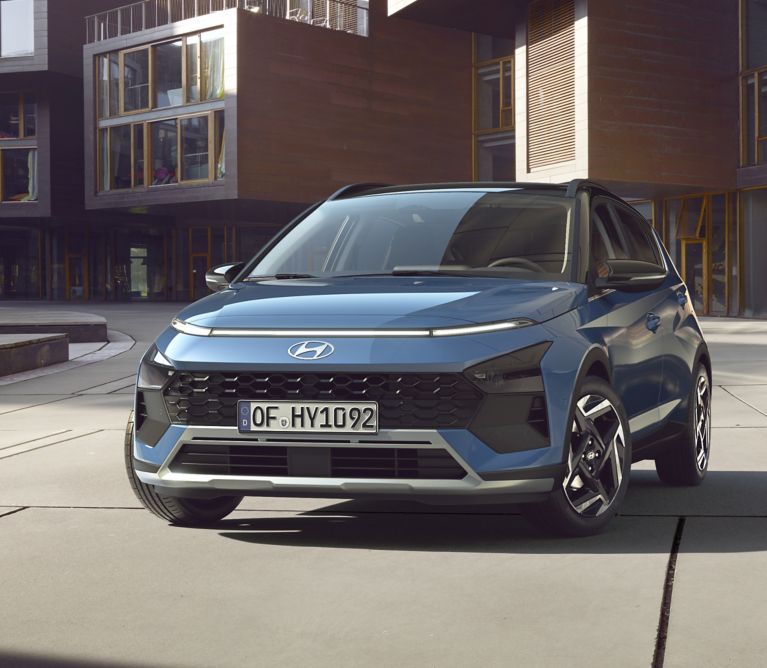
In the hyper-competitive subcompact crossover segment, standing out requires more than just high ground clearance. Buyers demand a seamless mix of eye-catching styling, cutting-edge infotainment, and exceptional utility. Enter the Hyundai Bayon Facelift, a vehicle specifically engineered for the unique demands of the European and global urban landscape.
Positioned as the entry point to Hyundai’s acclaimed SUV lineup just beneath the larger, all-electric-ready Kona the newly restyled Bayon packs a serious punch. Sharing its nimble platform with the agile i20 hatchback, the Bayon delivers the athletic footprint of a city-dwelling hatch with the commanding presence, elevated view, and immense cabin practicality of a genuine crossover.
Whether you are navigating narrow urban alleys, tackling weekend family escapes, or seeking class-leading digital cabin amenities, the new Bayon facelift is tailored to overdeliver. In this comprehensive, expert-led guide, we dissect every facet of the updated Hyundai Bayon, including its design overhaul, interior tech layout, powertrain configurations, and how it holds up against key industry competitors like the Ford Puma, Skoda Kamiq, and Renault Captur.
Key Takeaways: What's New in the Restyled Hyundai Bayon?
- Futuristic Exterior: Standardized "Seamless Horizon" LED lightbar running across the nose, a redesigned grille, and rugged bumper treatments.
- Premium Tech Integration: A 10.25-inch center AVN touchscreen and a 4.2-inch digital cluster now come standard, with an optional fully-customizable 10.25-inch high-resolution instrument cluster.
- Massive Cabin Space: Keeps its exceptional 411-liter trunk capacity (expanding to 1,205 liters), outperforming many larger crossovers in the segment above.
- State-of-the-Art Safety: Expanded Hyundai SmartSense ADAS package featuring Lane Following Assist (LFA), junction-turning FCA, and navigation-based cruise control.
- Enhanced Ambiance: Standardized full-LED interior lighting paired with a new multi-color ambient lighting system.
A Robust and Futuristic Exterior Makeover
The original Bayon was already celebrated for its striking angles and unconventional proportions. For this mid-cycle facelift, Hyundai’s design team doubled down on its bold visual language. The goal was simple: craft a more muscular, robust, and highly recognizable aesthetic that mirrors the design DNA of Hyundai's larger premium SUVs, the Kona and Tucson.
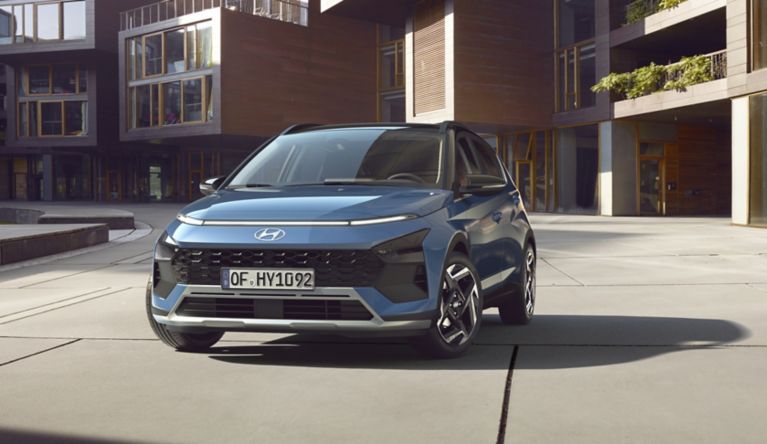
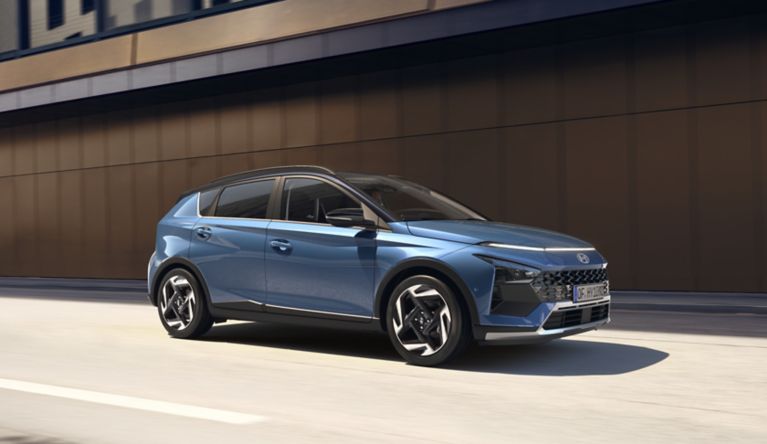
The defining element of the facelift is the striking Seamless Horizon LED lightbar. This continuous band of daytime running lights spans the width of the hood, establishing an ultra-modern, high-tech signature. Underneath this lightbar, the front grille has been widened and flared downward, giving the vehicle a broader, more authoritative stance. The bumper mesh pattern and integrated skid plate details have also been carefully reworked to emphasize its rugged, adventure-ready crossover genes.
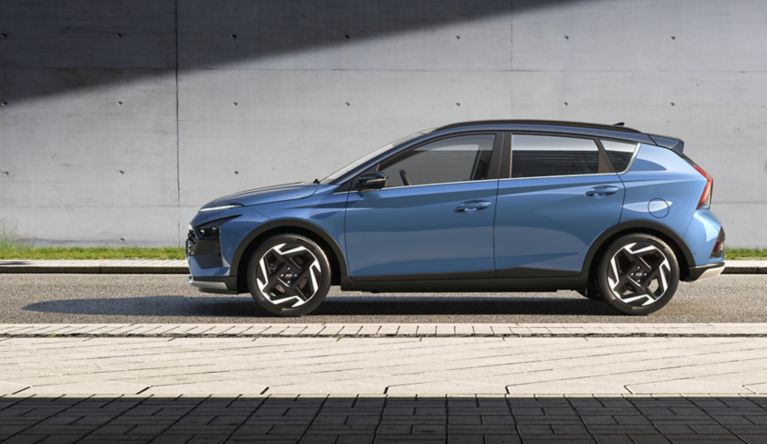
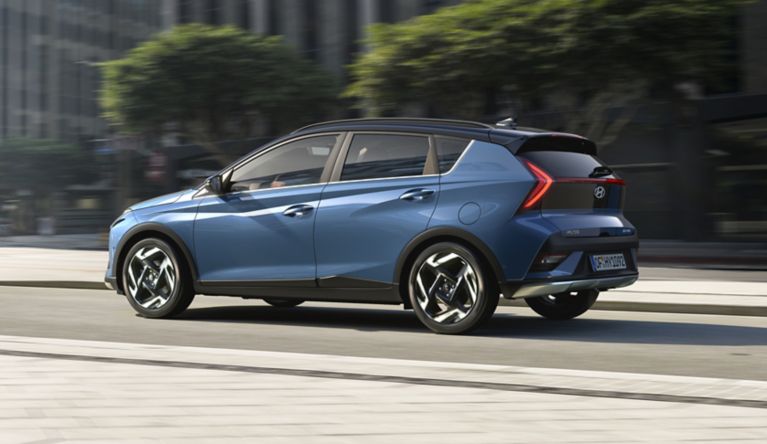
Moving to the side, the sharp, wedge-like silhouette remains, characterized by dynamic "arrowhead" shoulder lines and triangular styling blocks. To match this refreshed personality, the Bayon introduces stunning new 16-inch and 17-inch alloy wheel designs that enhance its sporty profile.
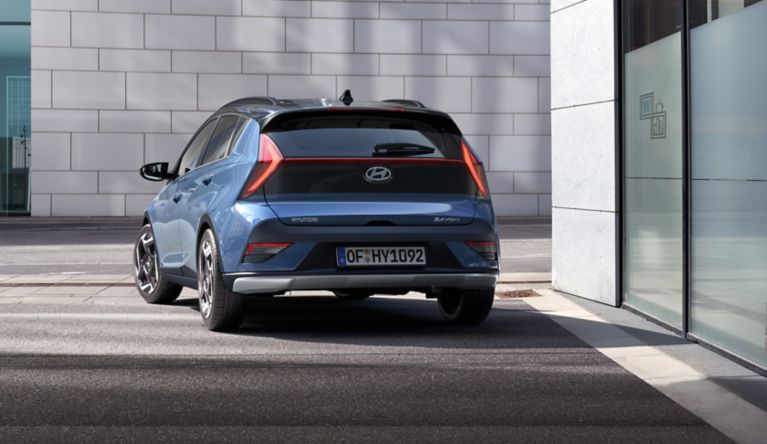
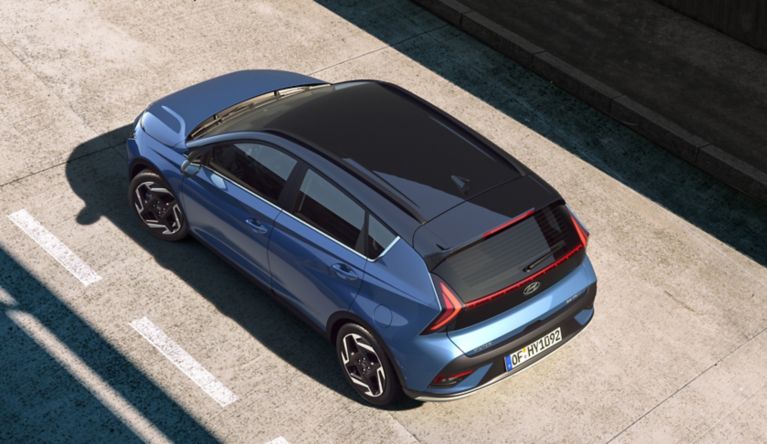
At the rear, the updates are equally deliberate. The rear bumper features a newly sculpted diffuser area finished in rugged contrast cladding, which helps protect against minor scratches in urban environments. The unique arrow-shaped taillights remain, connected across the tailgate to visually maximize the vehicle's width.
9 Bold Exterior Colors to Express Your Style
Buyers can personalize their Bayon with a rich palette of nine distinct exterior colors. This includes four brand-new, eye-catching additions designed to accentuate the vehicle's unique lines:
- Lumen Grey Pearl: A sleek, modern metallic grey with deep luster.
- Meta Blue Pearl: A vibrant, electric hue that changes character under different light conditions.
- Lucid Lime Metallic: A highly energetic, expressive shade for those who love to stand out.
- Vibrant Blue Pearl: A rich, deep, and sophisticated marine blue.
For a more customized, high-contrast look, buyers can opt for a striking two-tone roof finished in Phantom Black, which pairs beautifully with several of the primary paint colors.
Exterior Design Highlights
- Cutting-edge Seamless Horizon LED front signature.
- Wider, more aggressive lower grille and protective skid plate.
- Redesigned sporty 16-inch and 17-inch alloy wheels.
- Optional high-contrast Phantom Black two-tone roof options.
Style Trade-Offs
- No full-length panoramic sunroof option (only standard sunroof on select trims).
- High-gloss plastic on higher trims can easily attract dust and fingerprints.
Interior Comfort: Surprising Space & Smart Practicality
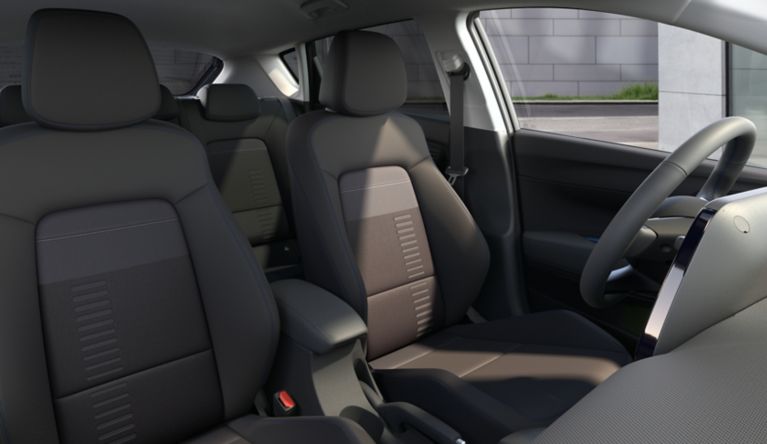
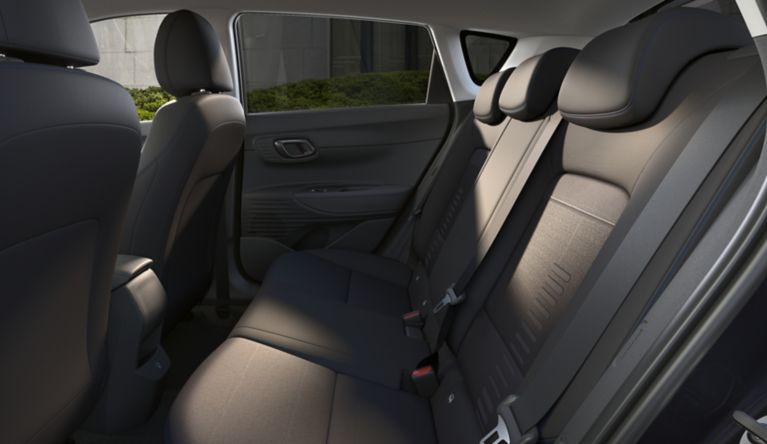
While the exterior turning heads is a plus, the real magic of the Hyundai Bayon lies within its cabin layout. Hyundai has optimized every millimeter of the interior space to deliver premium-level comfort and segment-leading utility. Despite its compact footprint, the passenger volume is outstanding.
Legroom is abundant, measuring a highly generous 1,072 mm in the front and 882 mm for rear-seat passengers. This means tall adults can sit comfortably in the rear without feeling cramped—a common issue in many subcompact SUVs.
A Class-Leading Cargo Space Champion
If boot space is high on your priority list, the Bayon is a clear champion. It boasts an incredible 411 liters of cargo capacity with the rear seats in place. This actually beats some larger vehicles, including its more expensive sibling, the pre-facelift Hyundai Kona (356 liters).
Need to haul larger items? The rear seats fold flat with a 60:40 split, instantly expanding the cargo hold to a cavernous 1,205 liters. Additionally, the clever luggage board can be slid and stored flat against the back of the rear seats, allowing you to easily accommodate tall items without leaving the parcel shelf at home.
Upgraded LED Ambiance and Premium Touches
The facelift replaces traditional halogen interior bulbs with crisp, efficient LED lighting. From the main cabin lights to the map reading lamps and vanity mirrors, the entire interior feels brighter and more premium.
Furthermore, the updated Bayon introduces an optional multi-color LED ambient lighting system integrated into the front footwells and door panels. Drivers can select from multiple color combinations to match their mood, creating a sophisticated and relaxing night-driving atmosphere.
Next-Gen Connectivity and Technology
Hyundai is a recognized pioneer in mainstreaming high-end vehicle tech, and the restyled Bayon is no exception. The cabin acts as a digital sanctuary, offering standard features that are usually reserved as expensive add-ons by competitors.
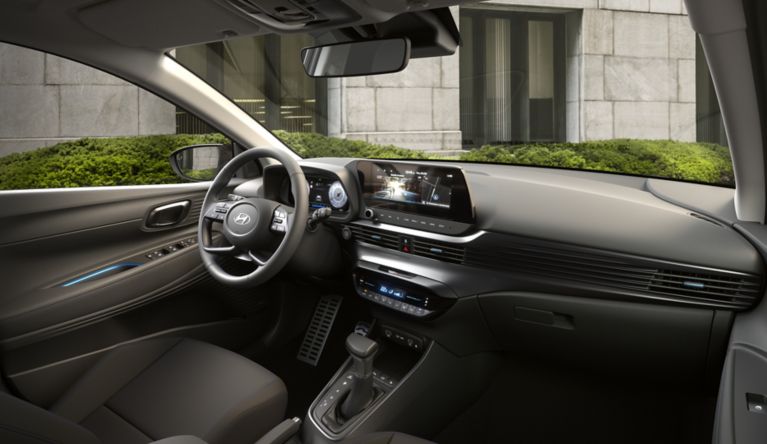
All trims now come standard with a clear 4.2-inch LCD driver display and a massive 10.25-inch central AVN (Audio, Video, Navigation) touchscreen. For a fully digitized command center, buyers can upgrade to the spectacular 10.25-inch fully digital instrument cluster, which alters its color scheme and graphics dynamically depending on the selected drive mode (Eco, Normal, Sport).
Staying connected is completely effortless thanks to:
- Apple CarPlay and Android Auto: Effortlessly sync your smartphone to access navigation, playlists, and messaging.
- Over-The-Air (OTA) Updates: No more trips to the dealership; the navigation maps and system software are automatically updated wirelessly.
- Hyundai Bluelink® Telematics: Monitor your vehicle's health, locate your car via your phone, send navigation destinations to the car, and check live traffic and weather.
- Simultaneous Fast Charging: Equipped with one front USB-C port, one rear USB-C port, and a front USB-A data port. A dedicated high-speed wireless induction charging pad is also available.
- Bose Premium Sound System: Music lovers can opt for a high-end Bose audio layout boasting 8 premium speakers, including a powerful subwoofer, for crystal-clear acoustics.
State-of-the-Art Safety: Hyundai SmartSense ADAS
In typical Hyundai fashion, driver and passenger protection is paramount. Despite its positioning as a compact city car, the Bayon facelift inherits the advanced Hyundai SmartSense suite of Advanced Driver Assistance Systems (ADAS). This class-leading array of safety features delivers semi-autonomous driving capabilities:
- Lane Following Assist (LFA): Uses camera sensors to detect road markings and actively helps center the vehicle safely within its lane.
- Forward Collision-Avoidance Assist (FCA): Scans the road ahead for vehicles, pedestrians, and cyclists, applying the brakes automatically if an imminent collision is detected. It also includes Junction Turning detection, preventing accidents when turning left across oncoming traffic.
- Navigation-Based Smart Cruise Control (NSCC): Adapts your speed automatically when driving on highways or expressways, slowing down safely before approaching upcoming curves based on real-time navigation data.
- Blind-Spot Collision-Avoidance Assist (BCA): Constantly monitors the rear corners. If a vehicle is detected, a warning light flashes in the side mirror. If you attempt a lane change, the brakes are selectively applied to pull you back to safety.
- Driver Attention Warning (DAW) & Leading Vehicle Departure Alert (LVDA): DAW analyzes your steering habits to warn of fatigue. LVDA politely pings you to go when the stopped vehicle ahead moves.
- eCall 2.0 (4G LTE): Automatically contacts emergency services with your location and vehicle details the instant an airbag deploys, or via a manual SOS button.
Under the Hood: Smartstream Powertrain & Efficiency
The driving experience of the Hyundai Bayon Facelift is defined by its highly efficient Smartstream engine architecture. Tailored for urban commutes and highway cruising, the powertrain lineup balances responsive acceleration with exceptional fuel economy.
The star of the lineup is the refined 1.0-litre T-GDi three-cylinder turbocharged petrol engine, generating 100 horsepower and up to 200 Nm of torque. It is paired with either a slick-shifting 6-speed manual transmission or a rapid 7-speed Dual-Clutch Transmission (DCT).
Let's take a look at the exact technical specifications of this turbocharged workhorse:
| Specification Metric | Hyundai Bayon 1.0 T-GDi DCT (Facelift) | Hyundai Bayon 1.0 T-GDi Manual (Facelift) |
|---|---|---|
| Engine Type | 998cc Inline 3-Cylinder Turbocharged Petrol (Direct Injection) | 998cc Inline 3-Cylinder Turbocharged Petrol (Direct Injection) |
| Horsepower | 100 HP @ 6,000 RPM | 100 HP @ 6,000 RPM |
| Max Torque | 200 Nm @ 2,000–2,500 RPM | 172 Nm @ 1,500–4,000 RPM |
| Transmission | 7-Speed Dual-Clutch Automatic (DCT) | 6-Speed Slick Manual |
| 0–100 km/h (0–62 mph) | 12.4 seconds | 11.3 seconds |
| Top Speed | 175 km/h (109 mph) | 179 km/h (111 mph) |
| Combined Fuel Consumption | 5.5 L/100 km (~42.8 US mpg / 51.4 UK mpg) | 5.4 L/100 km (~43.5 US mpg / 52.3 UK mpg) |
| CO2 Emissions (WLTP) | 124–125 g/km | 121–123 g/km |
The 1.0 T-GDi engine strikes an impressive balance. It offers sufficient torque down low, making urban lane-changes and highway merging completely effortless. Its softer, more forgiving suspension dampens bumps and city potholes beautifully, guaranteeing a secure, comfortable, and highly composed ride compared to some stiffer-riding rivals.
How Does the Bayon Compare with Class Rivals?
To help you make the best purchase decision, we have mapped out how the restyled Hyundai Bayon compares with three major competitors in the B-SUV segment:
| Feature / Spec | Hyundai Bayon Facelift | Skoda Kamiq | Ford Puma | Renault Captur |
|---|---|---|---|---|
| Trunk Space (L) | 411 Liters (Best-in-class style) | 400 Liters | 456 Liters (MegaBox included) | 422 Liters |
| Standard Infotainment | 10.25-inch Touchscreen | 8.2-inch Touchscreen | 8.0-inch / 12-inch Touchscreen | 10.4-inch portrait on high trims |
| Rear Legroom | 882 mm (Excellent) | Excellent (Best in class) | Tight | Sliding rear bench option |
| Driving Character | Comfortable, quiet, secure | Ultra-refined, highly smooth | Very sporty, firm ride | Soft, slightly wallowy in corners |
While the Ford Puma remains the go-to choice for enthusiast-level corner-carving, its firm suspension can feel jarring on broken city roads, and rear-passenger headroom is notably restricted. The Skoda Kamiq offers exceptional ride quality, but feels more like a raised station wagon than a muscular crossover, and falls short of the Bayon's visual flair and standard screen size. The Renault Captur is versatile with its sliding rear bench, but can feel slightly less planted and composed at highway cruising speeds.
Pros and Cons: The Honest Verdict
What We Love (Pros)
- Exceptional standard technology package with 10.25-inch center screen.
- Highly spacious cabin with outstanding front and rear legroom.
- Enormous, boxy 411-liter cargo space that rivals larger crossovers.
- Plentiful ADAS safety technologies included as standard.
- Supple, comfortable ride quality that handles urban potholes with ease.
Keep in Mind (Cons)
- Performance on the 1.0 T-GDi is relaxed (0–100 km/h in 11.3 to 12.4s).
- No full hybrid (HEV) or plug-in hybrid (PHEV) powertrains available.
- No All-Wheel Drive (AWD) option; strictly front-wheel drive.
Frequently Asked Questions (FAQ)
What are the main styling changes on the restyled Hyundai Bayon?
How big is the boot space in the Hyundai Bayon facelift?
Is the new Hyundai Bayon available in a hybrid or electric version?
What technology comes standard in the updated Hyundai Bayon?
Which active safety systems does Hyundai SmartSense include on the Bayon?
Is the Hyundai Bayon suitable for highway driving and family road trips?
Ready to Experience the Restyled Hyundai Bayon?
Combining head-turning Seamless Horizon aesthetics with class-leading utility and premium tech, the updated Bayon is the ultimate compact crossover for modern life.
Book Your Test Drive Today


